Week Six and Seven
("Book reading - The Psalms - Pleins Song reflection - Life & Breath - Matt Redman - Psalms read - 46, 76, 117, 118)
Half way through almost and it doesn't feel like it.
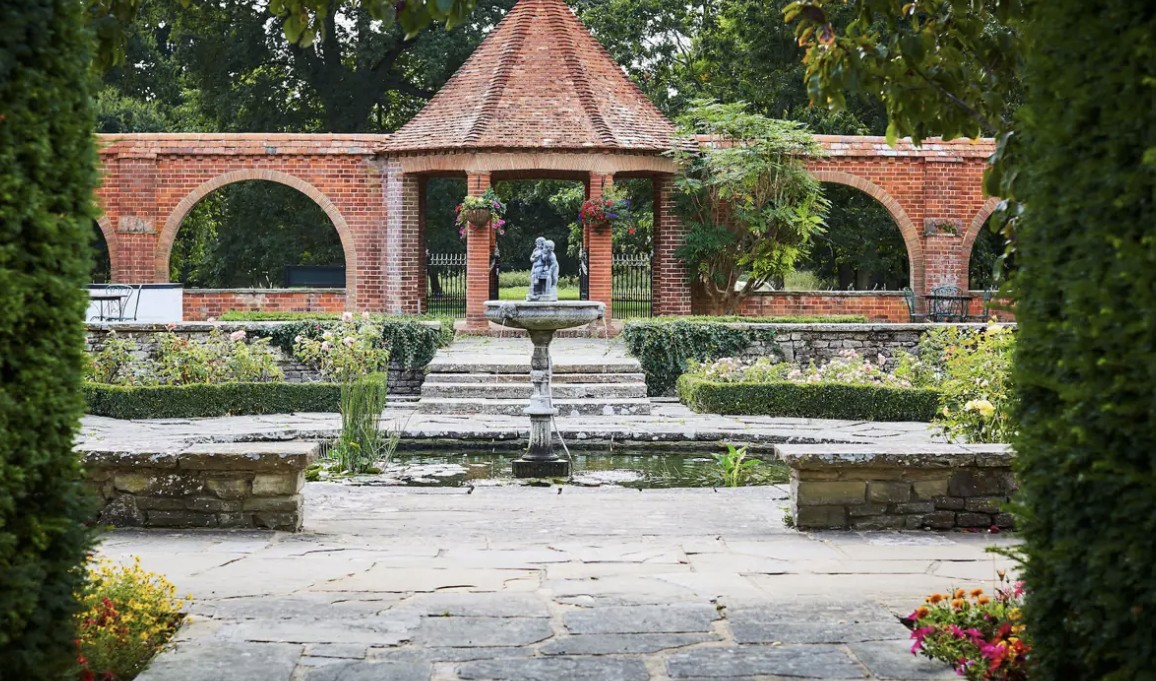
Last week I was able to attend the Superintentents retreat and conference at Milton House Hotel near Oxford. The picture above shows their garden.
In the retreat we reflected on places which were important to us and it made me consider how we align ourselves to situations. Many shared of homes and locations and I reflected on my special place is the garden. A constant work in progress of planting and uprooting it is my bliss - though here in Manchester also very wet.
The highlight of the conference were 2 sessions focused on the Psalms. Rabbi Shoshana Boyd Gelfand led us through a session on Psalms in Jewish Worship - listening, reflecting and singing Psalms and pondering which Psalms Jesus sang. Then Reverend Canon Nick Papadopulos reflecting the Psalms of the Passion. Did they know that was my emphasis on sabbatical? Well of course not. It felt a wondrous confirmation from God though.
This week I've enjoyed a slower pace - sleeping and reading.
Psalm 46
When you read certain scripture does a song play in your mind - as we find ourselves reading and reflecting on Psalm 46 - verse 10a appears - “Be still and know that I am God.” What a precious command and invitation for the world to hear as well as ourselves. But unpacking the context and understanding the whole psalm sets this verse ablaze with meaning and glory far deeper than any relaxation mantra. When we see chaos and turmoil around us and inside us, we know we need strength and safety for our souls from outside ourselves. How can Psalm 46 help?
The authors of this psalm were the “Sons of Korah.” A group of Levites who served as musicians in the temple of God in the Old Testament (1 Chron. 9:19; 6:22-32). They wrote, arranged, and planned the music the people of God used in worship (as suppose we would call them worship leaders).
It is considered that the Sons of Korah had a time of national distress in mind when they wrote this psalm. During the reign of King Hezekiah in Judah, Sennacherib, the King of Assyria, besieged Jerusalem. Hezekiah knew what Assyria had done to Israel just a short time earlier: siege, destruction, captivity in Assyria for the people of the northern part of Israel, and resettlement of Israel by other people groups (2 Kings 17:5-6, 24).
Assyria was capable and ruthless as it turned its murderous sights on Judah and the capital of Jerusalem. As you read Psalm 46, imagine the brutal Assyrian army surrounding Jerusalem while the Assyrian captain loudly shouts insults and threats for all the inhabitants of Jerusalem to hear (2 Kings 18:26). This took place around 702BC.
When King Hezekiah hears the threats, he tears his clothes, puts on sackcloth, and goes to the temple to beg for God’s help. And God, the refuge and strength of His people, hears and delivers. God tells Hezekiah: “I will defend this city to save it, for my own sake and for the sake of my servant David” (2 Kings 19:34). When the people of Jerusalem get up the next morning, they see the Lord’s work: the angel of the Lord had struck down 185,000 of the Assyrian troops. Let that number sink in: 185,000 dead bodies piled around the walls of Jerusalem. The next verse simply says, “Then Sennacherib king of Assyria departed and went home” (2 Kings 19:36). God totally squashed the threat and in response the Sons of Korah called Yahweh the “Lord of Hosts” (the Lord of Angel Armies), who is with His people. The covenant God of steadfast love, the God of Jacob, is present with overwhelming power (Ps. 46:11).
In fact, the refrain, “The Lord of hosts is with us; the God of Jacob is our fortress” (Ps. 46:7, 11) and the opening variation, “God is our refuge and strength, a very present help in trouble” (Ps. 46:1), point us to the structure and the main idea of the psalm. Psalm 46 divides into three stanzas, each punctuated with “selah” and the repeated idea of God as our refuge and fortress. This repetition and the song’s description of how God interacts with His enemies give us the main idea: God is the refuge of those who are at peace with Him, even when there is turmoil around us.
How is God present for us in our turmoil? In recognising the presence of God how can we Be still and know? For a moment dwell in that "Be Still" - "Be" and know God.
Psalm 76
Linked to Psalm 46 and the period of History described above - this Psalm is attributed to Asaph—a key singer, musician, and seer during the eras of David and Solomon. The psalm may have been penned by a later descendant of Asaph if it directly references the Assyrian siege, which happened long after the original Asaph's lifetime which was around 1000BC.
Asaph is credited with writing 12 of the psalms in the Bible (Psalm 50, and Psalms 73 through 83)
Linked with Isaiah 36-37, and 2 Kings 18 this praise psalm was written celebrating a great victory of God on behalf of His people, and those who connect it with the defeat of Sennacherib (Isaiah 37:36).
First, the psalmist celebrated when God shattered the siege of an evil power against Jerusalem. Because God is also faithful to deliver you, He deserves Your trust as well. Second, the psalmist celebrated that the enemy’s mighty chariots were no match for God’s power. Because God is faithful to deliver you, He also deserves your gratitude. Third, the psalmist rhetorically asked who can stand before God’s power. Because God is all powerful, He also deserves Your reverence. Fourth, the psalmist declared that God will one day judge all the Earth, sparing only the humble. Because God will one day judge evil, every person should humble themselves and repent of their sins. Fifth, the psalmist declared that God’s just wrath against evil would evoke praise from God’s people. Because God is faithful to deliver, He also deserves your worship. Sixth, the psalmist urged every person to respond by keeping their vows. Because God is faithful, He also deserves your obedience. Finally, the psalmist declared that the secular kings will be cut off and fear Him. Because God is sovereign over all, all should submit to Him.
How has God been faithful to you?
Psalm 117 - the shortest Psalm and one to be remembered. Using our protestant bible this is it is the 595th or middle chapter of the bible. Considered to be written by Asaph it focuses on hope and salvation.
Praise the Lord, all you nations;
extol him, all you peoples.
For great is his love toward us,
and the faithfulness of the Lord endures forever.
Praise the Lord.
As the bridge point of the Bible, it is also the first chapter to focus on God’s plan for universal salvation. It is also part of the “Hallel” Passover praises when the Jews celebrated how the blood of the Passover lamb allowed death to pass over them. Jesus Christ is not mentioned in this chapter. But everything points to Him. He is the Passover lamb, the Messiah, and the King of Kings for all the nations. Although unstated in the text, the promise of an offer of salvation is given to the Jews. This implied that they had a central role as God’s witnesses and light to the nations. The British preacher Charles Spurgeon once remarked: “This Psalm, which is very little in its letter, is exceedingly large in its spirit; for, bursting beyond all bounds of race or nationality, it calls upon all mankind to praise the name of the Lord.” Martin Luther was so moved by this chapter that he wrote 36 pages of commentary on its two verses.
Psalm 117 states: “ Praise the Lord, all nations; sing His praises, all peoples! For His mercy toward us is great, and the truth of the Lord is everlasting. Praise the Lord!” (Ps. 117:1-2).
This psalm reveals five truths about God, with two additional truths revealed through the New Testament. First, God’s direction for all the nations to praise Him reveals His plan for universal salvation. Second, God’s description of both Jews and gentiles praising Him foreshadows the united praise and worship He will receive in heaven. Third, believers will celebrate God’s “hesded”. This is His covenant mercy, grace, and love. Fourth, believers will also celebrate God’s truth and His triumph over evil. Fifth, the everlasting praise for God points to both His everlasting reign and His everlasting faithfulness. Sixth, because God had the Jews sing this psalm after the completion of the Passover, it pointed to Jesus’ completed work at the cross. He is the fulfillment of God’s promise to make His covenant with Abraham available to all the gentile nations. Finally, this offer of salvation to the gentiles exists within a Jewish book of Psalms. Thus, they had an important role in fulfilling His plan for universal evangelism.
Psalm 118 - the author is not mentioned explicitly but it is considered to be King David
On Easter Sunday, the church proclaims, “O give thanks to the LORD, for he is good; his steadfast love endures forever!” (Psalm 118:1). Written by King David in celebration of deliverance there is a spiritual movement of hope and exaltation.
Jesus Christ is risen. And in Christ, we too shall rise. God’s steadfast love endures forever! The words of Psalm 118 have long been used to herald Easter. “This is the day that the LORD has made; let us rejoice and be glad in it!” (118:24).
In its ancient Jewish context, Psalm 118 was most likely an entrance liturgy to the Temple, used at the festival of Passover. It proclaimed God’s deliverance from Egypt and, later on, from the Exile. The Psalm was a liturgical script, complete with speaking parts for leaders and congregation. One can hear the jubilant call and response in 118:2-4: “Let Israel say, ‘His steadfast love endures forever.’ Let the house of Aaron say, ‘His steadfast love endures forever.’ Let those who fear the LORD say, ‘His steadfast love endures forever.'”
With this Psalm on their lips, the priests and people processed into the Temple. The approach to the Temple culminates in verse 19, “Open to me the gates of righteousness…” and the condition for entrance is given in verse 20, “The righteous shall enter through it.” Then the festival procession proceeds up to the altar, to adorn it with signs of victory (verse 27). The physical movement begins outside the Temple, progressing inside and all the way to the altar. The people express their faith that since God has saved them in the past, he can be trusted in the future (verse 25).
The Psalm reminds us of our frailties- when hard pressed...we call to the Lord. As we give thanks to God - let us call on His name.
18/05/2026